

FSSC22000-Compliant: Reliable Fruit Drink Exporter in China, U100’s Quality Assurance Protocol for Global Markets

The morning light hits the office window, and the city hums with its usual hurried rhythm. On the desk, a small sachet of fruit drink sits quietly beside a stack of global logistics reports. For international buyers navigating the complex web of cross-border supply chains, ensuring food safety is a daily tightrope walk. Every shipment demands absolute precision. This scene reflects the broader reality of global trade, where finding a <a href="https://www.u100food.com/products">Reliable Fruit Drink Exporter in China</a> can make or break a brand's reputation in local markets.
The global fruit beverage sector operates under rigorous operational demands and unique physicochemical constraints. Liquid food matrices are inherently perishable and highly sensitive to thermal variations, microbial activity, and oxidative degradation during transit. Unlike non-perishable consumer goods, beverages require precise moisture barriers, sterile aseptic processing lines, and uninterrupted cold-chain logistics to maintain organoleptic integrity.
Global trade logistics expose these products to extreme temperature fluctuations across maritime shipping routes and customs holding yards. Even a minor deviation in pasteurization parameters or packaging seal integrity can lead to widespread spoilage, product recalls, and severe financial liability. Consequently, managing export-grade beverages requires an advanced understanding of food chemistry, shelf-life kinetics, and international regulatory frameworks.
Buyer Pain Points in Cross-Border Procurement
International importers, retail category managers, and wholesale distributors face formidable operational bottlenecks when sourcing fruit drinks overseas. The primary challenge centers on regulatory compliance friction across different customs jurisdictions. Destination markets enforce strict maximum residue limits, allergen labeling mandates, and microbiological safety standards. Non-compliant consignments face immediate detention, costly port demurrage charges, or mandatory destruction, destroying profit margins overnight.
Beyond regulatory hurdles, procurement teams struggle with supply chain opacity and inconsistent batch quality. Many overseas buyers encounter suppliers who fail to maintain standardized raw material sourcing, leading to unacceptable variations in taste, color, and nutritional profile between shipments. Furthermore, inadequate packaging materials often result in leakage or structural collapse during long-distance transit. Finding a manufacturing partner capable of eliminating these systemic variables remains the ultimate operational objective for global retail buyers.
Technical Resolution Logic and the Necessity of FSSC22000 Compliance
Overcoming these technical and operational barriers requires an institutionalized food safety management framework. FSSC22000 has emerged as the definitive benchmark for global food manufacturing compliance. It integrates ISO 22000 standards, sector-specific prerequisite programs (PRPs), and additional FSSC-defined requirements into a cohesive governance model.
Adopting FSSC22000 is necessary because it shifts quality management from reactive inspection to proactive hazard analysis and critical control point (HACCP) verification. The standard mandates systematic traceability from raw material intake to final consumer delivery. It ensures that every critical parameter—such as sterilization temperature, aseptic filling pressure, and hermetic seal validation—is continuously monitored and recorded. For international buyers, partnering with an FSSC22000-certified facility minimizes audit redundancy, accelerates customs clearance, and provides verifiable legal protection against liability claims.
Supplier Selection Standards for Global Retail Partners
Selecting an export partner requires evaluating objective operational competencies rather than marketing claims. Professional procurement criteria dictate a multi-layered assessment of manufacturing infrastructure, quality control systems, and supply chain reliability.
Key Supplier Evaluation Criteria
Certified Quality Infrastructure: Possession of internationally recognized certifications including FSSC22000, ISO 9001, HACCP, and FDA registration.
Traceability and Sourcing Transparency: Documented control over raw material origins and verified supplier auditing processes.
Formulation and R&D Agility: Demonstrated capability to formulate clean-label products with natural ingredients and high nutritional retention.
Commercial Track Record: Proven history of supplying tier-one retail chains and major international convenience store networks.
Enterprise Capabilities and Quality Assurance Protocol
<a href="https://www.u100food.com/aboutus.html">U100</a> operationalizes these rigorous standards through its established manufacturing and brand architecture. Operating under Zhonganya Group, the brand maintains production facilities in Hubei and Shandong Province, including specialized enterprise infrastructure certified by FDA, HACCP, ISO 9001, and ISO 22000.
The company's quality assurance protocol governs every stage of production. Raw materials are selected from verified origins, adhering to a strict corporate philosophy of minimal additive intervention. R&D efforts focus on four core categories: dried fruits, fruit beverages, nuts, and candies. This manufacturing rigor has allowed the brand to establish deep strategic partnerships with major convenience store chains such as 7-Eleven, Lawson, and FamilyMart, supplying over 100,000 retail stores globally.
Product Craftsmanship and Technical Innovation in Practice
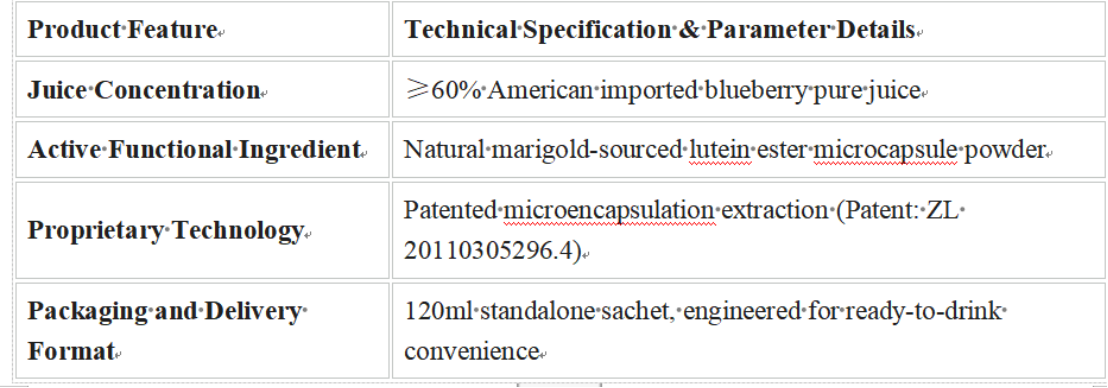
Excellence in manufacturing translates directly into product performance on retail shelves. The <a href="https://www.u100food.com/u100-lutein-ester-blueberry-fruit-drink-120ml.html">U100 Lutein Ester Blueberry Fruit Drink 120ml</a> illustrates this technical integration. Designed for functional nutrition, the formulation utilizes American imported blueberries with a pure fruit juice content of 60% or higher.
To maximize nutritional bioavailability, the product incorporates natural marigold-sourced lutein ester microcapsule powder processed via patented microencapsulation extraction technology (Patent number: ZL 20110305296.4). This technical innovation protects the active ingredient from oxidation during thermal processing and enhances human absorption rates. The simplified formula utilizes natural sweeteners to reduce metabolic burden while offering high nourishment, packaged in standalone sachets designed for immediate ready-to-drink consumption.
Securing Your Supply Chain Partnership
Establishing a resilient product portfolio requires aligning with verified manufacturing infrastructure. Retailers and distributors looking to expand their functional beverage offerings can review certified portfolios and technical specifications directly by visiting the official corporate website at <a href="https://www.u100food.com/">https://www.u100food.com/</a>.
Daisy liu
U100
email us here
Legal Disclaimer:
EIN Presswire provides this news content "as is" without warranty of any kind. We do not accept any responsibility or liability for the accuracy, content, images, videos, licenses, completeness, legality, or reliability of the information contained in this article. If you have any complaints or copyright issues related to this article, kindly contact the author above.
